Product Overview
[Drug Name]
Trade Name: Shuangjing Jili
English Name: Omeprazole Enteric-coated Tablets
Chinese Pinyin: Aomeilazuo Changrongjiaonang
[Ingredients]
Main ingredient and chemical name: Omeprazole, chemical name: 5-methoxy-2-{[(4-methoxy-3,5-dimethyl-2-pyridyl)-methyl]-sulfoxide}-1H-benzimidazole. Molecular formula: C₁ₐH₁₉N₃O₃S. Molecular weight: 345.41
[Properties]
This product is an enteric-coated tablet that appears off-white after removal of the enteric coating.
[Indications]
Indicated for gastric ulcers, duodenal ulcers, stress ulcers, reflux esophagitis, and Zollinger-Ellison syndrome (gastrinoma).
[Dosage and Administration]
Oral administration, do not chew.
1. Peptic ulcer: 20 mg (one tablet at a time), 1-2 times daily. Take orally in the morning or once in the morning and evening. The treatment course for gastric ulcers is usually 4 to 8 weeks, and for duodenal ulcers is usually 2 to 4 weeks.
2. Reflux esophagitis: Take 20 to 60 mg (1 to 3 tablets) once or twice daily. Take orally in the morning or once in the morning and evening. The treatment course is usually 4 to 8 weeks.
3. Zollinger-Ellison syndrome: Take 60 mg (3 tablets) once daily. The total daily dose can be adjusted to 20 to 120 mg (1 to 6 tablets) depending on the condition. If the total daily dose exceeds 80 mg (4 tablets), it should be taken in two divided doses.
[Adverse Reactions]
This product is well tolerated. Common adverse reactions include diarrhea, headache, nausea, abdominal pain, flatulence, and constipation. Rarely, elevated serum aminotransferases (ALT, AST), rash, dizziness, drowsiness, and insomnia may occur. These adverse reactions are generally mild, disappear spontaneously, and are not related to dose. Long-term treatment has not been associated with serious adverse reactions, but gastric mucosal cell hyperplasia and atrophic gastritis may occur in some cases.
[Contraindications]
This product is contraindicated in patients with allergies, severe renal insufficiency, and infants and young children.
[Precautions]
1. When treating gastric ulcers, the possibility of ulcerative gastric cancer should be ruled out first, as this product may alleviate its symptoms and delay treatment.
2. Use with caution in patients with hepatic and renal insufficiency.
3. This product is an enteric-coated tablet. Please be careful not to chew it when taking it to prevent premature release of drug particles in the stomach, which could affect efficacy.
[Use in Special Populations]
Precautions for Children: Contraindicated in infants and young children.
Precautions for Pregnancy and Lactation: Use with caution in pregnant and lactating women.
Precautions for the Elderly: Not yet known.
[Drug Interactions]
This product may delay the elimination of drugs metabolized by the liver, such as diazepam, phenytoin, warfarin, and nifedipine. When using this product with these drugs, the dosage of the latter should be reduced.
[Pharmacological Action]
Proton pump inhibitor. This drug is a lipid-soluble, weakly alkaline drug that is easily concentrated in acidic environments. Therefore, after oral administration, it is specifically distributed in the secretory tubules of the gastric mucosal parietal cells. In this highly acidic environment, it is converted into its active form, the sulfenamide. It then irreversibly binds to the sulfhydryl group of the H+,K+-ATPase (also known as the proton pump) in the parietal cell secretory membrane via a disulfide bond, forming a sulfenamide-proton pump complex. This inhibits the enzyme's activity and blocks the final step in gastric acid secretion. Therefore, this drug has a strong and long-lasting inhibitory effect on gastric acid secretion caused by various causes.
[Storage]
Store tightly closed in a cool, dry place.
[Strength]
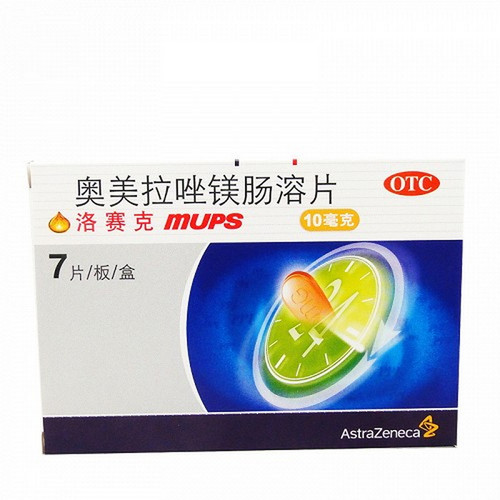
10mg
[Packaging Size]
28 tablets/box
[Expiry Date]
24 months
[Approval Number]
National Medicine Standard No. H20010787
[Manufacturer]
Company Name: Qingdao Shuangjing Pharmaceutical Co., Ltd.