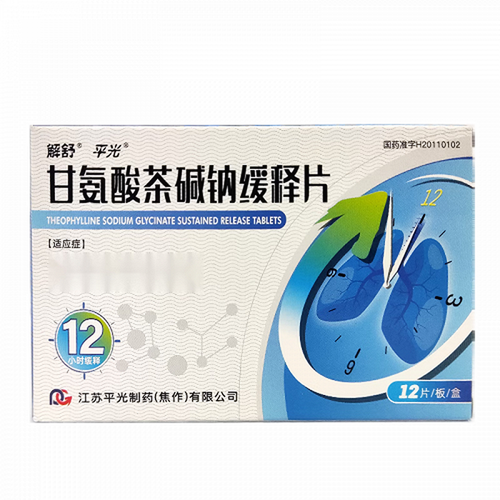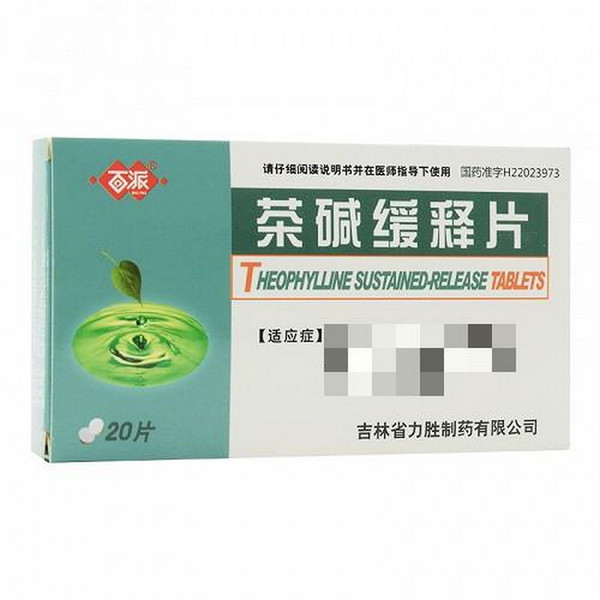

Product Overview
[Drug Name]
Generic Name: Theophylline Sustained-Release Tablets
Trade Name: BaiPai Theophylline Sustained-Release Tablets 0.1g*20 Tablets
Pinyin Code: BaiPai ChaJianHuanShiPian 0.1g*20 Tablets
[Main Ingredient]
Theophylline.
[Properties]
White tablets.
[Indications/Main Functions]
Indicated for the relief of wheezing symptoms in conditions such as bronchial asthma, asthmatic bronchitis, and obstructive pulmonary emphysema; also used for asthma caused by cardiogenic pulmonary edema.
[Specifications]
0.1g*20 tablets
[Dosage and Administration]
Oral. BaiPai Theophylline Sustained-Release Tablets should not be crushed or chewed. For adults and children over 12 years old, the starting dose is 0.1g-0.2g (1-2 tablets), twice daily, morning and evening with 100ml of warm water. The dosage may be adjusted based on the condition and efficacy, but the daily dose should not exceed 0.9g (9 tablets), taken in two divided doses.
[Adverse Reactions]
Theophylline toxicity often occurs at serum concentrations of 15-20 μg/ml, especially at the beginning of treatment. Early symptoms include nausea, vomiting, irritability, and insomnia. When serum concentrations exceed 20 μg/ml, tachycardia and arrhythmias may occur. When serum theophylline concentrations exceed 40 μg/ml, fever, dehydration, and convulsions may occur. In severe cases, respiratory and cardiac arrest may occur, leading to death.
[Contraindications]
This product is contraindicated in patients with allergies, active peptic ulcers, and uncontrolled seizure disorders.
[Drug Interactions]
1. Diltiazem and verapamil may interfere with theophylline metabolism in the liver. Concomitant use with this product may increase its blood concentration and toxicity.
2. Cimetidine may reduce the hepatic clearance of theophylline extended-release tablets. Concomitant use may increase theophylline serum concentration and/or toxicity.
3. Certain antibacterial drugs, such as the macrolides erythromycin, roxithromycin, and clarithromycin, and the fluoroquinolones enoxacin, ciprofloxacin, ofloxacin, levofloxacin, clindamycin, and lincomycin, can reduce the clearance of theophylline and increase its plasma concentration. This is particularly true for erythromycin and enoxacin. When theophylline is used with these drugs, the dose should be appropriately reduced.
4. Phenobarbital, phenytoin, and rifampicin can induce hepatic enzymes, accelerating the hepatic clearance of theophylline. Theophylline also interferes with phenytoin absorption, decreasing the plasma concentrations of both. Therefore, the dose should be adjusted when used together.
5. Coadministration with lithium salts can increase renal excretion of lithium, potentially affecting its effectiveness.
6. Coadministration of theophylline extended-release tablets with mexiletine can reduce the clearance of theophylline and increase its plasma concentration, necessitating dose adjustment.
7. Coadministration with caffeine or other xanthines can increase their effects and toxicity.
[Precautions]
1. Like other theophylline extended-release preparations, Biopharm Theophylline Extended-Release Tablets are not suitable for patients with status asthmaticus or acute bronchospasm.
2. Serum theophylline concentrations should be monitored regularly to ensure maximum efficacy without the risk of excessive blood concentrations.
3. Patients with renal or hepatic impairment, those over 55 years of age, especially men, and those with concomitant chronic lung disease, heart failure of any cause, and persistent fever. Patients taking certain medications and those with reduced theophylline clearance may experience significantly prolonged serum theophylline concentrations after discontinuation of concomitant medications. The dosage should be adjusted or the dosing interval extended as appropriate.
4. Theophylline preparations can cause arrhythmias and/or worsen existing arrhythmias; any changes in heart rate and/or rhythm should be monitored and investigated.
5. This product should be used with caution in patients with hypoxemia, hypertension, or a history of peptic ulcers.
[Pharmacology and Toxicology]
It has a direct relaxant effect on bronchial and pulmonary vascular smooth muscle.