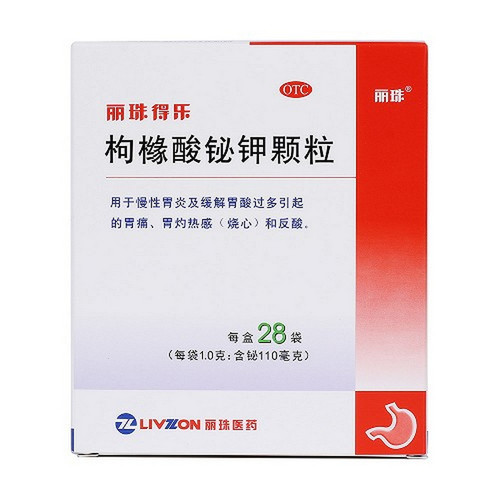
Product Overview
[Drug Name]
Generic Name: Potassium Citrate Sustained-Release Tablets
Trade Name: Lizhu Pharmaceutical Potassium Citrate Sustained-Release Tablets 1.08g*30 Tablets
Pinyin Full Code: LiZhuYiYao ZuoZuoSuanJiaHuanShiPian 1.08g*30 Tablets
[Main Ingredient]
The main ingredient of this product is potassium citrate. Chemical Name: Potassium 2-hydroxypropane-1,2,3-tricarboxylate monohydrate. Molecular Formula: C6H5K3O7·H2O. Molecular Weight: 324.41
[Properties]
This product is a white to off-white tablet.
[Indications/Main Functions]
This product is used for renal tubular acidosis with calcium oxalate kidney stones, calcium oxalate kidney stones caused by hypocitraturia of any cause, and uric acid stones with or without calcium stones.
[Specifications]
1.08g*30 tablets
[Dosage and Administration]
Oral administration. Swallow the tablet whole with or within 30 minutes after a meal. Patients receiving this medication should limit salt intake (avoid high-salt diets and adding salt to meals) and encourage increased fluid intake (daily urine output should be maintained at least 2 liters). The goal of treatment with this medication is to restore normal urine citrate levels (greater than 320 mg/day and as close as possible to the normal average of 640 mg/day) and to increase urine pH to 6.0-7.0. Monitor serum electrolytes (sodium, potassium, chloride, and carbon dioxide), serum creatinine, and complete blood count every four months. More frequent monitoring is recommended for patients with heart disease, renal disease, or acidosis. Perform regular electrocardiograms. Discontinue this medication if hyperkalemia, a significant increase in serum creatinine, or a significant decrease in hematocrit or hemoglobin develops. A 24-hour urine citrate and urine pH measurement should be performed to determine the appropriate starting dose and evaluate the effectiveness of dose adjustments. In addition, urine citrate and urine pH should be measured every four months during treatment. Literature indicates that there are no studies using potassium citrate extended-release tablets at doses greater than 100 mEq/day, and their use should be avoided. Severe hypocitraturia: For patients with severe hypocitraturia (urine citrate <150 mg/day), the initial treatment dose is 60 mEq/day, 30 mEq twice daily, or 20 mEq three times daily. Mild to moderate hypocitraturia: For patients with mild to moderate hypocitraturia (urine citrate >150 mg/day), the initial treatment dose is 30 mEq/day, 15 mEq twice daily, or 10 mEq three times daily.
[Adverse Reactions]
During treatment with this drug, some patients may experience mild gastrointestinal symptoms such as abdominal discomfort, vomiting, diarrhea, decreased bowel movements, or nausea. These symptoms are due to drug irritation of the digestive tract and can be alleviated by taking the drug with food or reducing the dosage. A waxy matrix may be present in the patient's stool.
[Contraindications]
This drug is contraindicated in the following situations: 1. Patients with hyperkalemia (or those with conditions or factors that can cause hyperkalemia): further elevation of blood potassium may lead to cardiac arrest. These conditions or factors include: chronic renal failure, uncontrolled diabetes, acute dehydration, excessive strenuous exercise, adrenal insufficiency, extensive tissue damage, or taking potassium-sparing diuretics (such as triamterene, spironolactone, amiloride). 2. Patients with conditions that prevent or delay the passage of the tablet into the digestive tract, such as those with delayed gastric emptying, esophageal compression, intestinal obstruction or stenosis, or those taking anticholinergic drugs. 3. Patients with peptic ulcers: This drug has the potential to cause ulcers. 4. Patients with active urinary tract infections (infections caused by urea-degrading or other bacteria, associated with calcium or struvite stones): Bacteria can enzymatically degrade citrate, thereby reducing the effect of this product on increasing urinary citrate. In addition, the increased urine pH caused by treatment with this product may promote further bacterial growth. 5. Patients with renal impairment (glomerular filtration rate less than 0.7 ml/kg/min): Due to the increased risk of soft tissue calcification and hyperkalemia.
[Precautions]
Hyperkalemia: In patients with impaired potassium excretion, use of this product may cause hyperkalemia and cardiac arrest. Potentially fatal hyperkalemia may develop rapidly and remain asymptomatic. This product should be avoided in patients with chronic renal failure or any other condition that reduces potassium excretion, such as severe myocardial damage or heart failure. Closely monitor for signs of hyperkalemia through regular blood tests and ECGs. Gastrointestinal damage: Based on reports of upper gastrointestinal mucosal damage after taking potassium chloride (wax-based) in the literature, 30 healthy volunteers taking Weichangning (2 mg three times daily) were divided into three groups: potassium citrate extended-release tablets (95 meq/day three times daily), wax-based potassium chloride (96 meq/day three times daily), or wax-based placebo (three times daily). One week later, upper gastrointestinal mucosal endoscopy was performed. The results of upper gastrointestinal irritation tests in the potassium citrate extended-release tablet and wax-based potassium chloride groups were similar, both higher than those in the placebo group. A subsequent similar study showed that the severity of damage was reduced without Weichangning. There have been reports of small intestinal obstruction and/or ulceration, and death, caused by high potassium concentrations at the site of tablet dissolution. Furthermore, wax-based preparations may be due to the lack of an enteric coating and release of potassium ions in the stomach, leading to upper gastrointestinal damage. The incidence of upper gastrointestinal damage with wax-based potassium chloride is approximately 1/10,000 per year. Experience with extended-release potassium citrate tablets is limited, but the incidence of upper gastrointestinal damage is likely similar to that of wax-based potassium chloride preparations. If severe vomiting, abdominal pain, or gastrointestinal bleeding occurs, discontinue use immediately and seek medical attention for gastrointestinal perforation or intestinal obstruction. Precautions for Use: This product is an extended-release tablet. Do not crush, chew, or suck the tablet when taking it. This product must be taken under the supervision of a physician, especially if taking diuretics or digitalis preparations. Patients should contact their physician promptly if they have difficulty swallowing the tablet or if the tablet sticks to the throat.