Product Overview
[Drug Name]
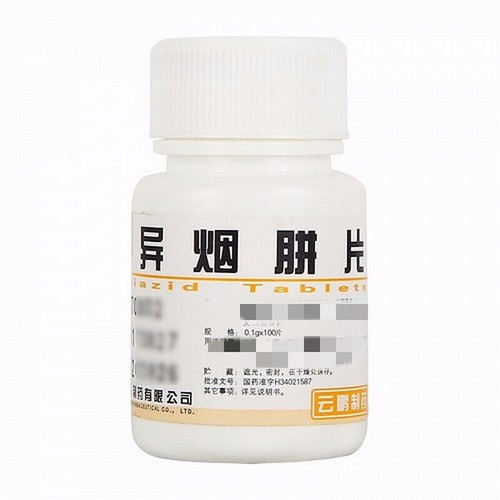
Generic Name: Isoniazid Tablets
Trade Name: Minsheng Isoniazid Tablets 0.1g*100 Tablets
Pinyin Full Code: MinSheng YiYanZuoPian 0.1g*100Pian
[Main Ingredients]
The main ingredient of this product is isoniazid. Chemical Name: 4-Pyridinecarboxylic acid hydrazide Molecular Formula: C6H7N3O Molecular Weight: 137.14
[Properties]
This product is a white tablet or off-white tablet.
[Indications/Main Functions]
(1) Isoniazid is used in combination with other anti-tuberculosis drugs for the treatment of various types of tuberculosis, including tuberculous meningitis and other mycobacterial infections. (2) Isoniazid is suitable for the prevention of various types of tuberculosis: ① Family members or close contacts of patients who have been recently diagnosed with tuberculosis; ② Patients with a strong positive tuberculin purified protein derivative test (PPD) and chest X-ray examination consistent with non-progressive tuberculosis, negative sputum bacteria, and who have not received regular anti-tuberculosis treatment in the past; ③ Patients who are receiving immunosuppressants or long-term hormone treatment, patients with certain blood diseases or reticuloendothelial system diseases (such as leukemia, Hodgkin's disease), diabetes, uremia, silicosis or gastrectomy, etc., whose tuberculin purified protein derivative test is positive; ④ Patients under 35 years old with a positive tuberculin purified protein derivative test; ⑤ People who are known or suspected to be infected with HIV, whose tuberculin purified protein derivative test is positive, or people who have close contact with patients with active pulmonary tuberculosis.
【Precautions】
(1) Cross-allergic reaction. People who are allergic to ethionamide, pyrazinamide, niacin or other chemically related drugs may also be allergic to this product. (2) Interference with diagnosis: Copper sulfate method may produce a false positive reaction when measuring urine sugar, but it does not affect the results of enzyme method. Isoniazid may increase the measured values of serum bilirubin, alanine aminotransferase and aspartate aminotransferase. (3) Patients with a history of mental illness, epilepsy and severe renal impairment should use it with caution. (4) If symptoms of optic neuritis occur during treatment, eye examination should be performed immediately and rechecked regularly. (5) In case of isoniazid poisoning, large doses of vitamin B6 can be used to counteract it.
[Drug Interactions]
It is contraindicated in patients with abnormal liver function, mental illness and epilepsy.
[Specifications]
0.1g*100 tablets
[Usage and Dosage]
Oral prevention: Adults take 0.3g (3 tablets) per day, taken at once; children take 10mg/kg per day based on body weight, with a total daily dose not exceeding 0.3g (3 tablets), taken at once. Treatment: Adults, in combination with other anti-TB drugs, should take 5 mg/kg orally daily, up to a maximum of 0.3 g (3 tablets), or 15 mg/kg orally daily, up to a maximum of 900 mg (9 tablets), 2-3 times per week. Children should take 10-20 mg/kg orally daily, not exceeding 0.3 g (3 tablets) per day, taken at once. For children with severe TB (e.g., tuberculous meningitis), daily doses may be as high as 30 mg/kg (up to a maximum of 500 mg (5 tablets) per day), but caution should be exercised regarding liver damage and the development of peripheral neuritis.
[Adverse Reactions]
Commonly reported symptoms include unsteady gait or numbness, tingling, burning, or pain in the fingers (peripheral neuritis); dark urine, yellowing of the eyes or skin (hepatotoxicity, with an increased incidence in patients over 35 years of age); and loss of appetite, unusual fatigue or weakness, nausea, or vomiting (prodromal symptoms of hepatotoxicity). Rare cases may include blurred or decreased vision, with or without eye pain (optic neuritis); fever, rash, cytopenia, and gynecomastia. This product may occasionally cause convulsions due to neurotoxicity.
[Contraindications]
This product is contraindicated in patients with impaired liver function, mental illness, or epilepsy.