Product Overview
[Drug Name]
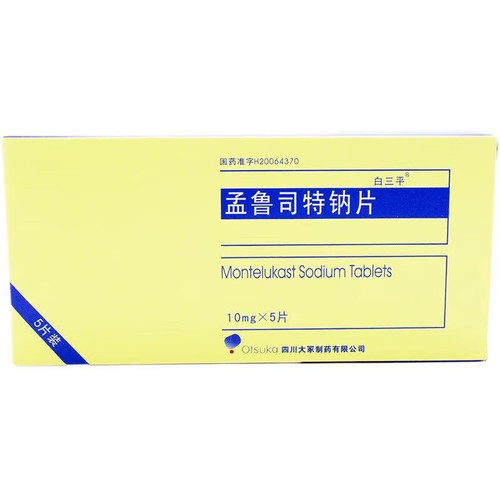
Generic Name: Montelukast Sodium Tablets
Trade Name: Singer Ning
English Name: Montelukast Sodium Tablets
Chinese Pinyin: MengLuSiTeNaPian (ShunErNing)
[Ingredients]
The main ingredient of this product is montelukast sodium.
[Appearance]
This product is a light yellow, irregular film-coated tablet.
[Indications]
This product is indicated for the prevention and long-term treatment of asthma in adults aged 15 years and older, including prevention of daytime and nighttime asthma symptoms, treatment of aspirin-sensitive asthma, and prevention of exercise-induced bronchoconstriction. This product is indicated for the relief of symptoms caused by allergic rhinitis (seasonal allergic rhinitis and perennial allergic rhinitis in adults aged 15 years and older).
[Dosage and Administration]
One tablet (10 mg) once daily. Asthma patients should take the tablet at bedtime. Patients with allergic rhinitis may take the tablet as needed based on their condition. Patients with both asthma and allergic rhinitis should take the tablet once nightly. Adult patients 15 years and older with asthma and/or allergic rhinitis should take 10 mg once daily. It is generally recommended to evaluate therapeutic efficacy based on asthma control indicators, and the efficacy of this product is apparent within one day of treatment. This product can be taken with or without food. Patients should be advised to continue taking this product regardless of whether their asthma is under control or exacerbated. No dosage adjustment is required for elderly patients, those with renal insufficiency, those with mild to moderate hepatic impairment, or patients of different genders. Montelukast Sodium Tablets and Other Asthma Medications: This product can be added to a patient's existing treatment regimen. Reducing the Dosage of Concomitant Medication: For patients whose asthma is not effectively controlled with bronchodilators alone, this product can be added to their treatment regimen. Once a clear clinical response is observed (usually after the first dose), the bronchodilator dose can be reduced based on the patient's tolerance. For patients with asthma receiving inhaled corticosteroids, the dose of the corticosteroid can be appropriately reduced based on the patient's tolerance. This dose should be gradually reduced under the guidance of a physician. Some patients can gradually reduce the dose of inhaled corticosteroids until they are completely discontinued. However, this product should not be used abruptly to replace inhaled corticosteroids.
[Adverse Reactions]
This product is generally well tolerated, with mild adverse reactions that generally do not require discontinuation of treatment. The overall incidence of adverse reactions with this product is similar to that with placebo. The safety of this product has been evaluated in clinical studies of approximately 2,600 adult patients with asthma aged 15 years and older. In two similarly designed, placebo-controlled, 12-week clinical studies, abdominal pain and headache were the only drug-related adverse events with an incidence of ≥1% in the treatment group and a higher incidence than in the placebo group. However, the incidence of these adverse events did not differ significantly between the two groups. In clinical studies, a total of 544 patients have been treated with this product for at least 6 months, 253 patients for 1 year, and 21 patients for 2 years. The incidence of adverse events did not change with longer treatment duration. (See inner package insert for details.)
[Contraindications]
This product is contraindicated in patients with hypersensitivity to any of its components.
[Precautions]
The efficacy of this oral medication for the treatment of acute asthma exacerbations has not been established. Therefore, it should not be used to treat acute asthma exacerbations. Although the dose of concomitant inhaled corticosteroids can be gradually reduced under a physician's guidance, this medication should not be used abruptly to replace inhaled or oral corticosteroids. In rare cases, patients receiving anti-asthma medications, including leukotriene receptor antagonists, experiencing a reduction in the dose of systemic corticosteroids have experienced one or more of the following: eosinophilia, vascular rash, worsening pulmonary symptoms, cardiac complications, and/or neuropathy (sometimes diagnosed as Churg-Strauss syndrome, a systemic eosinophilic vasculitis). Although a causal relationship between these events and leukotriene receptor antagonists has not been established, caution and appropriate clinical monitoring are recommended when reducing the dose of systemic corticosteroids in patients receiving this medication. Please read the package insert carefully and use as directed by your physician.
[Use in Special Populations]
Precautions for Children:
Safety and efficacy studies have been conducted in children aged 6 months to 14 years. For use in children aged 2 to 14 years, refer to the [Dosage and Administration] section of Montelukast Sodium Chewable Tablets. Safety and efficacy in children under 6 months of age have not been studied. Studies have shown that this product does not affect growth rate in children.
Precautions for Pregnancy and Lactation:
No data are available from studies in pregnant women. Pregnant women should avoid using this product unless specifically indicated. Global postmarketing experience has shown rare reports of congenital limb defects in newborns following use of this product during pregnancy. The vast majority of these women also took other asthma medications during pregnancy. A causal relationship between this product and these events has not been established. It is unknown whether this product is excreted in breast milk. Because many drugs are excreted in breast milk, this product should be used with caution in breastfeeding women.
Precautions for Elderly:
Clinical studies have shown no age-related differences in the efficacy and safety of this product.
[Drug Interactions]
This product can be used in combination with other medications commonly used for the prevention and long-term treatment of asthma and the treatment of allergic rhinitis. In drug interaction studies, the recommended dose of montelukast did not produce clinically significant pharmacokinetic effects on the following drugs: theophylline, prednisone, prednisolone, oral contraceptives (ethinyl estradiol/norethindrone 35/1), terfenadine, digoxin, and warfarin. Montelukast's area under the plasma concentration-time curve (AUC) decreased by approximately 40% in patients taking phenobarbital concomitantly. However, no dose adjustment of montelukast is recommended. In vitro studies have shown that montelukast is an inhibitor of CYP2C8. However, data from a clinical drug interaction study between montelukast and rosiglitazone, a typical substrate primarily metabolized by CYP2C8, have not been published.
[Pharmacology]
Pharmacology: Cysteinyl leukotrienes (LTC4, LTD4, LTE4) are potent inflammatory mediators released by various cell types, including mast cells and eosinophils. These important pro-asthma mediators bind to cysteinyl leukotrienes (CysLT) receptors. Type I cysteinyl leukotriene (CysLT1) receptors are distributed throughout the human airways (including airway smooth muscle cells and airway macrophages) and other proinflammatory cells (including eosinophils and certain bone marrow stem cells). CysLTs are implicated in the pathophysiology of asthma and allergic rhinitis. In asthma, leukotriene-mediated effects include a range of airway responses, such as bronchoconstriction, mucus secretion, increased vascular permeability, and eosinophil accumulation. In allergic rhinitis, CysLTs are released from the nasal mucosa during both the immediate and delayed phases following allergen exposure, contributing to the symptoms of allergic rhinitis. Intranasal CysLT challenge increases nasal airway resistance and symptoms of nasal obstruction. This product is a potent 1:3 oral formulation that significantly improves inflammatory markers in asthma. Biochemical and pharmacological bioassays have shown... Montelukast has a high affinity and selectivity for CysLT2 receptors (compared to other pharmacologically important airway receptors such as prostanoid, cholinergic, and β-adrenergic receptors). Montelukast effectively inhibits the physiological effects of LTC, LTD, and LTE binding to CysLT2 receptors without any receptor agonist activity. Current studies suggest that montelukast does not antagonize CysLT2 receptors. Toxicology 1. Acute Toxicity: In mice and rats, no mortality occurred after single oral administration of montelukast sodium at doses up to 5000 mg/kg (15,000 mg/m2 and 29,500 mg/m2 in mice and rats, respectively). This dose is the maximum dose tested (oral LD50 > 5000 mg/kg) and is equivalent to 25,000 times the recommended daily dose for adults*. Long-term toxicity studies in monkeys and rats lasted up to 53 weeks, and in infant monkeys and mice up to 14 weeks. Clinical trials have shown that montelukast sodium is well tolerated and has a wide safety margin. No effects on toxicological parameters were observed in any experimental animal model when administered at doses at least 125 times the recommended human dose.* No instances of montelukast sodium withholding at therapeutic doses have been observed in either adult or pediatric patients. Carcinogenicity: Montelukast sodium was not found to be carcinogenic in rats at oral doses up to 200 mg/kg/day for 106 weeks and in mice at oral doses up to 100 mg/kg/day for 92 weeks. These doses are equivalent to 1000 and 500 times the recommended adult dose.* Montelukast sodium was not found to be genotoxic or mutagenic. Montelukast sodium was negative in both the in vitro microbial mutation assay and the V-79 mammalian cell mutation assay, with or without metabolic activity. Genotoxicity was not observed in the rat hepatocyte alkaline washout assay and the Chinese hamster ovary cell chromosome aberration assay, with or without microsomal enzyme activity. Similarly, oral administration of montelukast sodium to male or female mice at doses up to 1200 mg/kg (3600 mg/m²) (6000 times the recommended adult daily dose*) did not induce chromosomal abnormalities in bone marrow cells. Reproductive toxicity studies in male rats at oral doses of montelukast sodium up to 800 mg/kg/day and female rats at doses up to 100 mg/kg/day did not show effects on fertility or reproductive capacity. These doses are 4000 times and 500 times higher than the recommended adult dose, respectively*. In developmental toxicity studies, no treatment-related adverse effects were observed at doses up to 400 mg/kg/day in rats and 100 mg/kg/day in rabbits. Montelukast sodium has been reported in rats and rabbits to be potentially invasive to the fetus, and its presence has been detected in the milk of lactating rats.
[Storage]
Store at room temperature, away from moisture and light.
[Specification]
10mg x 5s (Singulair)
[Packaging]
Aluminum-plastic packaging, 5 tablets per box
[Expiry Date]
36 months
[Approval Number]
HJ20181187/HJ20181188 (for inquiries from the State Food and Drug Administration)
[Manufacturer]
Company Name: Hangzhou Merck Pharmaceuticals Co., Ltd.