Product Overview
[Drug Name]
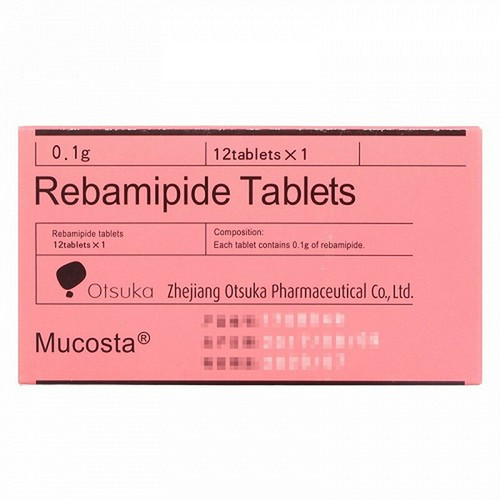
Generic Name: Rebamipide Tablets
Trade Name: Wei Kuai Le Rui Ba Pai Te Tablets 0.1g x 12 tablets
Pinyin Code: Wei Kuai Le Rui Ba Pai Te Pian
[Main Ingredient]
The main ingredient of this product is rebamipide. [Ingredient] Molecular Formula: C19H15CIN2O4 Molecular Weight: 370.7864
[Properties]
This product is a film-coated tablet that appears off-white after removal of the coating.
[Indications/Main Functions]
Improvement of gastric mucosal lesions (erosion, bleeding, congestion, edema) in acute exacerbations of gastric ulcers, acute gastritis, and chronic gastritis.
[Specifications]
0.1g x 12 tablets (Wei Kuai Le)
[Dosage and Administration]
Improvement of gastric mucosal lesions (erosion, bleeding, congestion, edema) in acute exacerbations of acute gastritis and chronic gastritis: Generally, adults take 0.1g (one tablet) orally three times a day. For gastric ulcer, adults usually take 0.1g (1 tablet) at a time, 3 times a day, orally in the morning, evening and before bedtime.
[Adverse Reactions]
According to Japanese literature reports: 54 of the 10,047 cases investigated (0.54%) experienced side effects including abnormal clinical test values. Among them, 18 of the 3,035 elderly patients aged 65 and above (0.59%) experienced side effects. There was no difference in the type and incidence of side effects between the elderly and non-elderly. (1) Serious adverse reactions 1) Leukopenia (less than 0.1%), thrombocytopenia (frequency unknown): Leukopenia and thrombocytopenia may occur. In this case, the patient should be fully observed. If abnormalities are found, the drug should be discontinued and appropriate treatment should be given. 2) Liver dysfunction (less than 0.1%), jaundice (frequency unknown [sup]*[/sup]): Liver dysfunction and jaundice may occur with increased GOT, GPT, y-GPT, and AL-P. In this case, the patient should be fully observed. If abnormalities are found, the drug should be discontinued and appropriate measures should be taken. (2) General adverse reactions Note 1) If such symptoms occur, stop taking the drug. Note 2) If transaminase increases significantly, or if fever, rash, etc. occur at the same time, stop taking the drug and take appropriate measures. *Because it is a spontaneous report, the frequency of occurrence of its side effects is unknown.
[Contraindications]
Patients with a history of allergy to the ingredients of this product should not take this product.
[Drug Interactions]
No research has been conducted on this project and there are no reliable references.
[Precautions]
1. When using this product for pregnant women, the pros and cons must be carefully weighed. Breastfeeding women should stop breastfeeding while taking this product. 2. Use with caution in elderly patients. The safety of this product for children has not been determined. 3. If allergic reactions such as itching, rash, or eczema occur during medication, discontinue use immediately.
[Pediatric Use]
The safety of this product in children has not been confirmed (experience is limited).
[Elderly Use]
Because elderly patients generally have reduced physiological functions, be aware of digestive side effects.
[Overdose]
No reports have been reported to date.
[Pharmacology and Toxicology]
I. Pharmacological Actions: According to international literature reports: 1. Inhibitory Effects and Healing Promotion of Experimental Gastric Ulcers: This product can inhibit gastric mucosal damage caused by water immersion ulcers, aspirin ulcers, indomethacin ulcers, histamine ulcers, serum serotonin ulcers, pyloric ligation ulcers, and reactive oxygen species-related ischemia-reperfusion, platelet-activating factor (PAF), diethyldithiocarbamate (DDC), stress response, and indomethacin. It can also promote the healing of acetic acid ulcers in rats and inhibit recurrence 120-140 days after ulcer formation. 2. Inhibitory Effects and Healing Promotion of Experimental Gastritis: This product not only inhibits the development of taurocholic acid-induced experimental gastritis in rats but also promotes healing. 3. Effect of increasing gastric mucosal prostaglandins: This product increases the content of prostaglandin E2 in the gastric mucosa of rats, and increases prostaglandin E2 and prostaglandin 12 in gastric fluid. It also increases the metabolite of prostaglandin E2, 15-keto-13,14-dihydro-prostaglandin E2. This product increases the content of prostaglandin E2 in the gastric mucosa of healthy adult men and has been shown to inhibit gastric mucosal damage induced by ethanol overload. 4. Effect of protecting the gastric mucosa: This product inhibits gastric mucosal damage induced by ethanol, strong acids, and strong bases in rats. It also inhibits damage to gastric mucosal epithelial cells caused by aspirin and taurocholic acid in domestic rabbit fetuses, and inhibits gastric mucosal damage caused by aspirin, ethanol, and hydrochloric acid-ethanol overload in healthy adult men. 5. Effect of increasing gastric mucosal fluid volume: This product increases the activity of the biosynthetic enzymes of high-molecular-weight glycoproteins in rat mucus, increasing the amount of surface mucus and soluble mucus in the gastric mucosa. The effect of increasing soluble mucus is related to endogenous prostaglandins. 6. Effect of increasing gastric mucosal blood flow: This product increased mucosal blood flow in rats, improving blood circulation disorders caused by blood loss. 7. Effect on the gastric mucosal barrier: This product showed little effect on the gastric mucosal potential difference in rats, but it could inhibit the decrease in gastric mucosal potential difference caused by ethanol. 8. Effect on hypersecretion of gastric alkaline substances: This product increased the secretion of gastric alkaline substances in rats. 9. Effect on promoting gastric mucosal cell regeneration: This product enhanced the regenerative capacity of gastric mucosal cells in rats and increased the number of surface epithelial cells. 10. Effect on repairing damaged gastric mucosa: This product normalized the repair process in a rabbit cultured gastric mucosal epithelial cell repair model that had been delayed by bile acids and hydrogen peroxide. 11. Effect on gastric acid secretion: This product had little effect on basal gastric juice secretion in rats and showed no inhibitory effect on stimulated gastric acid secretion. 12. Effects on Reactive Oxygen Species: This product scavenges free radicals and inhibits the production of superoxides by polymorphonuclear leukocytes. It inhibits Helicobacter pylori-induced gastric mucosal damage caused by neutrophil reactive oxygen species in vitro. While suppressing the stress response and inducing gastric mucosal damage in rats induced by indomethacin, this product also reduces the level of lipid peroxides in the gastric mucosa. 13. Effects on Inflammatory Cell Infiltration in the Gastric Mucosa: Studies in rat models of taurocholic acid-induced gastritis, NSAID-induced gastric mucosal injury, and ischemia-reperfusion have shown that this product inhibits inflammatory cell infiltration. 14. Effects on Gastric Mucosal Inflammatory Cytokines (Interleukin-8): This product inhibits the increased production of interleukin-8 (IL-8) by human gastric epithelial cells induced by Helicobacter pylori and inhibits the activation of NF-κB and the expression of IL-8 mmRNA in epithelial cells (in vitro). II. Toxicology Studies: This experiment was not conducted and no reliable references are available.