Product Overview
【Drug Name】
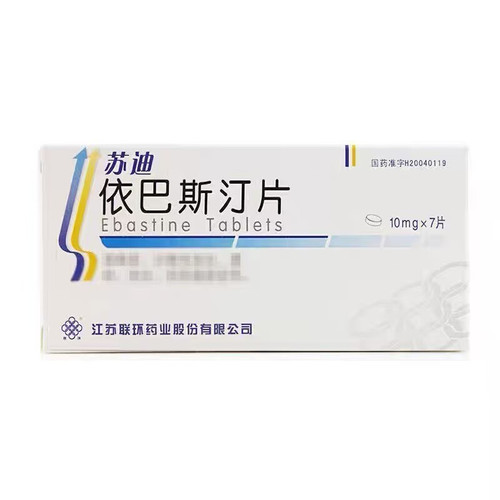
Generic Name: Ebastine Tablets
English Name: Ebastine Tablets
Pinyin: Yibasiting Pian
【Ingredients】
Main ingredient: Ebastine. Chemical name: 4-[4-(diphenylmethyloxy)-piperidin-1-yl]-1-(4-tert-butylphenyl)-1-butanone. Molecular formula: C32H39NO2. Molecular weight: 469.67
【Indications】
Suitable for allergic rhinitis (seasonal and perennial) with or without allergic conjunctivitis. Symptomatic treatment of chronic idiopathic urticaria.
【Appearance】
This product is a film-coated tablet, white after removing the coating.
【Specifications】
10 mg per tablet.
【Dosage and Administration】
Oral administration. Adults or children over 12 years of age: 1-2 tablets once daily. This product is not recommended for children under 12 years of age or patients with difficulty swallowing.
This product must be swallowed with a small amount of water, with or without food.
No dose adjustment is required for elderly patients and patients with renal insufficiency or mild to moderate hepatic impairment. The daily dose for patients with severe hepatic impairment should not exceed 10 mg. Treatment may be prolonged until symptoms disappear.
【Pharmacology and Toxicology】
Ebastine has a rapid and long-acting antihistamine effect and a high affinity for histamine H1 receptors. When administered orally, neither ebastine nor its metabolite carebastine crosses the blood-brain barrier. This explains why ebastine has only a mild sedative effect on the central nervous system (CNS).
Study data indicate that ebastine is a long-acting, highly selective histamine H1 receptor blocker with no anticholinergic effects.
Preclinical safety data show that no toxic effects of ebastine were found in routine pharmacological safety studies. Repeat-dose studies did not reveal any toxicity, reproductive toxicity, potential carcinogenicity, or adverse effects on reproductive function.
【Adverse Reactions】
In a pooled analysis of a placebo-controlled clinical trial, 5,708 patients treated with ebastine reported headache, somnolence, and dry mouth as the most common adverse reactions. Adverse reactions reported in pediatric clinical trials (sample size 460) were similar to those observed in adults.
Other adverse reactions reported in children under 12 years of age, occurring in less than 1% of cases, included increased appetite, diarrhea, rash, irritability, mood swings, hyperactivity, altered taste, and asthenia.
【Drug Interactions】
Studies have shown pharmacokinetic and pharmacodynamic interactions when ebastine is used in combination with ketoconazole or erythromycin (both known to prolong the QT interval on electrocardiograms). This may increase plasma concentrations of ebastine and, to a small extent, carnestine, but without significant clinical pharmacodynamic effects. QT interval prolongation was only about 10 milliseconds compared to using either drug alone. Therefore, ebastine should be used with caution in patients concurrently taking azole antifungals such as ketoconazole or itraconazole, and macrolide antibiotics such as erythromycin.
Pharmacokinetic interactions can be observed when ebastine is taken concurrently with rifampin. These interactions can lead to decreased plasma concentrations and reduced antihistamine activity.
No interactions have been reported between ebastine and theophylline, warfarin, cimetidine, diazepam (Valium), or alcohol.
When ebastine is taken with food, plasma concentrations and its basal metabolic products increase by 1.5–2.0 times under certain influences. However, this increase does not affect the time to peak plasma concentration. That is, co-administration with food does not affect the clinical efficacy of ebastine.
Ebastine affects the effectiveness of skin tests on antibiotics; therefore, skin tests should only be performed 5–7 days after discontinuation of ebastine. Additionally, the effects of some other antihistamines may be enhanced after using ebastine.
【Contraindications】
This product is contraindicated in patients with hypersensitivity to ebastine or any component of the tablets.
【Precautions】
This product contains lactose. Patients with hereditary galactose intolerance or glucose-galactose malabsorption should not take this product.
Ebastine should be used with caution in patients with known cardiac risk factors, such as QT prolonged syndrome on electrocardiogram, hypokalemia, or those taking medications that prolong the QT interval or CYP3A4 enzyme inhibitors, such as azole antifungals like ketoconazole and itraconazole, and macrolide antibiotics like erythromycin (see the [Drug Interactions] section).
Pharmacokinetic interactions may also occur when rifampin is used concomitantly with ebastine (see the [Drug Interactions] section).
Ebastine should be used with caution in patients with severe hepatic impairment (see the [Dosage and Administration] section).
Because ebastine takes effect 1–3 hours after administration, it is not suitable for monotherapy in cases of acute allergic reaction.
Effects on driving and machine operation ability: A study designed to test the effects of ebastine on driving ability showed no effect if the recommended daily dose is maintained below 30 mg. Based on the above data, proper use of ebastine has no effect on driving or operating machinery. However, for sensitive patients with abnormal responses to ebastine, it is recommended to assess individual reactions before driving or engaging in complex activities: drowsiness or dizziness may occur (see the [Adverse Reactions] section).
【Use in Pregnant and Lactating Women】
Fertility: No data on human fertility related to ebastine are available.
Pregnancy: Data on the use of ebastine in pregnant women are limited. Animal studies have shown no direct or indirect adverse effects on reproductive toxicity. As a precaution, it is best to avoid using ebastine during pregnancy.
Lactation: It is currently unknown whether ebastine is excreted in breast milk. High protein binding (>97%) of ebastine and its major metabolite, carristin, indicates that it is not excreted into breast milk. As a precaution, it is best to avoid using ebastine during lactation.
【Use in Children】
This product is suitable for adults and children aged 12 years and older, with the same dosage and administration as adults for children aged 12 years and older. For adverse reactions in children, please see the [Adverse Reactions] section. [Use in the Elderly] There were no statistically significant differences in pharmacokinetics between elderly subjects and adult or young adult volunteers. The dosage and administration for elderly patients are the same as for adult patients, and no dose adjustment is required.
【Packaging】
Polyvinyl chloride solid pharmaceutical hard sheets, packaged in pharmaceutical aluminum foil. Specifications: 10mg*24 tablets/box
【Storage】
Store below 30℃ in a dry place, protected from light.
【Shelf Life】
24 months
【Executive Standard】
National Medical Products Administration Standard YBH08342021
【Approval Number】
National Drug Approval Number H20213555
【Marketing Authorization Holder and Manufacturer】
Holder and Manufacturer: Hunan Jiudian Pharmaceutical Co., Ltd.