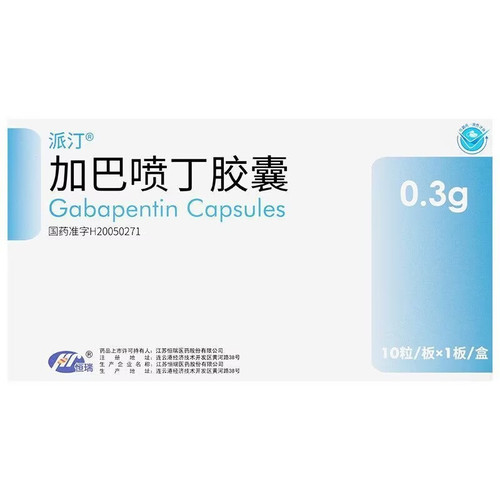
Product Overview
【Drug Name】
Generic Name: Gabapentin Capsules
Brand Name: Dili
English Name: Gabapentin capsules
Pinyin: Gabapentin
【Ingredients】
The main ingredient of this product is gabapentin, its chemical name is: 1-(aminomethyl)-cyclohexanoic acid.
【Appearance】
This product is a hard capsule, the contents of which are white or off-white powder.
【Indications】
1. Postherpetic neuralgia: Used for the treatment of postherpetic neuralgia in adults.
2. Epilepsy: Used as adjunctive therapy for partial seizures in adults and children over 12 years of age with or without secondary generalized seizures. It can also be used as adjunctive therapy for partial seizures in children aged 3-12 years.
【Dosage and Administration】
1. Postherpetic neuralgia: On the first day, take 0.3g of gabapentin once, on the second day, take 0.6g, divided into two doses; on the third day, take 0.9g, divided into three doses. Subsequently, as needed to relieve pain, the dose can be gradually increased to 1.8g daily, divided into three doses. In overseas clinical studies, efficacy was comparable within a daily dose range of 1.8g to 3.6g, and doses exceeding 1.8g daily did not show additional benefit.
2. Epilepsy: Gabapentin can be used in combination therapy with other antiepileptic drugs. Gabapentin is administered orally in divided doses (3 times daily). The dosage is gradually increased from an initial low dose to an effective dose. For patients over 12 years of age: on the first day of administration, 0.3g once daily; on the second day, 0.3g twice daily; on the third day, 0.3g three times daily, and then maintain this dose. According to overseas research literature, the dosage of gabapentin can be increased to 1.8g daily, and some patients can still tolerate doses up to 2.4g daily. The safety of doses above 2.4g daily is uncertain.
【Adverse Reactions】
1. Postherpetic neuralgia: Primarily dizziness, drowsiness, and peripheral edema. Other adverse events occurring in foreign clinical trials with an incidence rate higher than 1% and higher than the placebo control group include: Systemic: asthenia, infection, headache, accidental injury, abdominal pain. Digestive system: diarrhea, constipation, dry mouth, nausea, vomiting, flatulence. Metabolic and nutritional disorders: weight gain, hyperglycemia. Nervous system: ataxia, abnormal thinking, abnormal gait, uncooperative behavior, sensory impairment. Respiratory system: pharyngitis. Skin and appendages: rash. Special sensory: amblyopia, diplopia, conjunctivitis, otitis media. 2. Epilepsy: The most common adverse events are drowsiness, fatigue, dizziness, headache, nausea, vomiting, weight gain, tension, insomnia, ataxia, nystagmus, paresthesia, and anorexia. Occasionally, asthenia, visual disturbances (amblyopia, diplopia), tremor, joint dislocation, abnormal thinking, amnesia, dry mouth, depression, and mood swings may occur. The following complications have occasionally occurred in clinical studies: indigestion, constipation, abdominal pain, urinary incontinence, increased appetite, rhinitis, pharyngitis, cough, myalgia, back pain, facial and acral edema or generalized edema, erectile dysfunction, dental abnormalities, gingivitis, pruritus, leukopenia, fractures, vasodilation, and hypertension. Additionally, aggressive behavior, mood instability, hyperactivity (excessive movement, some of which is uncontrollable), viral infections, and fever have been observed in clinical trials in children under 12 years of age. Hemorrhagic pancreatitis has been reported in patients treated with gabapentin capsules (see Precautions). There have been isolated reports of allergic reactions (Stevens-Johnson syndrome, erythema multiforme) with gabapentin capsules. Laboratory tests: In clinically controlled studies, 16% of patients experienced clinically relevant fluctuations in blood glucose (3.3 mmol/L or ≥7.8 mmol/L, normal range 3.5–5.5 mmol/L) (see Precautions). Elevated liver function test results have been reported when used concomitantly with other antiepileptic drugs.
【Contraindications】
Gabapentin capsules are contraindicated in individuals with known hypersensitivity to any component of this drug or in patients with acute pancreatitis. Gabapentin capsules are ineffective for patients with primary generalized seizures, such as absence seizures.
【Precautions】
Foreign studies have reported that withdrawal of antiepileptic drugs can induce seizures and status epilepticus. Antiepileptic drugs should not be abruptly discontinued as this may increase the frequency of seizures. In placebo-controlled studies, the incidence of status epilepticus was 0.6% (3/543) in the gabapentin treatment group and 0.5% (2/378) in the placebo group. Of the 2074 patients treated with gabapentin in all studies (including controlled and uncontrolled), 31 (1.5%) experienced status epilepticus. Of these, 14 patients had not experienced status epilepticus in previous treatments or while taking other medications. Due to insufficient medical history data, it cannot be concluded whether gabapentin treatment is related to a higher or lower incidence of status epilepticus compared to those not treated with gabapentin. Potential Carcinogenicity: Preclinical animal studies of carcinogenicity found a higher incidence of pancreatic acinar adenocarcinoma in male rats; the clinical significance of this result is unclear. The premarketing clinical studies of gabapentin are unclear regarding its potential to predict tumorigenesis in humans. The clinical studies included 2085 patients on long-term treatment. Within two years of discontinuing gabapentin, 10 patients developed new tumors (2 breast cancers, 3 brain cancers, 2 lung cancers, 1 adrenal cancer, 1 non-Hodgkin's lymphoma, and 1 endometrial cancer), and 11 patients experienced tumor progression (9 brain cancers, 1 breast cancer, and 1 prostate cancer). Because there is no background data on tumor incidence and recurrence rates in similar populations not treated with gabapentin, it is impossible to know whether treatment in this study affected the incidence. Sudden and Unexplained Deaths: During the premarketing studies of gabapentin, 8 out of 2203 patients (2103 of whom were on long-term treatment) experienced sudden and unexplained deaths. Some of these deaths could be attributed to epileptic seizures, such as undetected seizures occurring at night. The incidence of this is 0.0038 per year. While this rate exceeds that of healthy individuals of the same age and sex, it falls within the range of sudden death rates in epilepsy patients not taking gabapentin (from 0.0005 in the general population to 0.003 in clinical trial populations similar to this trial, or 0.0005 in refractory patients). Therefore, the reliability of these results depends on the comparability of the populations treated with gabapentin and the accuracy of the statistics. Special considerations: In clinical controlled studies, 16% of patients experienced potentially clinically significant fluctuations in blood glucose (3.3 mmol/L or ≥7.8 mmol/L, normal range 3.5–5.5 mmol/L). Therefore, diabetic patients should monitor their blood glucose frequently and adjust their hypoglycemic drug dosage as needed. Patients with renal insufficiency must reduce the dosage of this product (see Dosage and Administration). There have been reports of hemorrhagic pancreatitis occurring with this product. Therefore, if clinical symptoms of pancreatitis (persistent abdominal pain, nausea, recurrent vomiting) occur, this product should be discontinued immediately, and a comprehensive physical examination, clinical and laboratory tests should be performed to diagnose pancreatitis as early as possible. There is insufficient experience with the use of gabapentin in patients with chronic pancreatitis; its use should be determined by a physician. Patients receiving concurrent morphine treatment may experience elevated gabapentin blood concentrations. Patients should be carefully monitored for central nervous system depression such as drowsiness, and the dosage of gabapentin or morphine should be appropriately reduced (see Drug Interactions). Effects on driving and machine operation: This product acts on the central nervous system and can cause sedation, dizziness, or similar symptoms. Therefore, even when taken at the prescribed dose, this product can reduce reaction time and impair the ability to drive, operate complex machinery, and work in exposed environments, especially at the beginning of treatment, when increasing the dosage, changing medications, or when consuming alcohol. [Use in pregnant and lactating women] There is currently no experience with the use of this product in pregnant women; it should only be used after a thorough assessment of the benefits/risks. This product is secreted in breast milk. Because the possibility of serious adverse events in infants cannot be ruled out, breastfeeding women should discontinue breastfeeding or use this product if it is necessary to use it (considering the necessity of antiepileptic treatment for the mother). [Pediatric Use] For dosage and administration in children, please refer to the "Dosage and Administration" section. [Geriatric Use] In treating postherpetic neuralgia, the same dose is more effective in patients aged 75 years and older than in younger patients. However, the influence of other factors cannot be ruled out. Except for peripheral edema and ataxia, which increase with age, the types and incidence of side effects are similar across age groups. No systematic studies have been conducted on the treatment of epilepsy in individuals over 65 years of age. However, clinical observations indicate that adverse events in this age group are not different from those in younger individuals.
【Use in Special Populations】
Precautions for Children: See the "Dosage and Administration" section for dosage and administration in children.
Pregnancy and Lactation Precautions: There is currently no experience with the use of this product in pregnant women. It should only be used after a thorough assessment of the benefits/risks. This product is excreted in breast milk. Because the possibility of serious adverse events in infants cannot be ruled out, breastfeeding women should discontinue breastfeeding or discontinue the use of this product if it is necessary (considering the necessity of antiepileptic treatment for the mother).
Precautions for the Elderly: No systematic studies have been conducted in individuals aged 65 years and older. However, clinical observations indicate that adverse events in this age group are not significantly different from those in younger individuals.
【Drug Interactions】
Gabapentin is minimally metabolized and does not interfere with the metabolism of other commonly used antiepileptic drugs. The drug interaction data described in this section are from studies in relevant healthy adults and patients with epilepsy. Phenytoin: Studies of single and multiple doses of gabapentin (0.4 g three times daily) in patients with epilepsy who had been treated with phenytoin for at least two months (N=8) showed that gabapentin had no effect on steady-state plasma concentrations of phenytoin, and phenytoin had no effect on the pharmacokinetics of gabapentin. Carbamazepine: Gabapentin (0.4 g three times daily; N=12) did not affect the steady-state plasma concentrations of carbamazepine and carbamazepine 10,11 epoxide. Similarly, carbamazepine did not alter the pharmacokinetics of gabapentin. Valproic acid: Before and during co-administration of gabapentin (0.4 g three times daily; N=17), the mean steady-state plasma concentrations of valproic acid were not different, and the pharmacokinetic data of gabapentin were not affected by valproic acid. Sedatives and hypnotics: Steady-state pharmacokinetic data were assessed similarly for sedatives and hypnotics, whether used alone or in combination, or for gabapentin (0.3g three times daily; N=12). Naproxen: Concomitant use of naproxen sodium capsules (250mg) and Neurontin (125mg) increased gabapentin absorption by 12% to 15%. Gabapentin had no effect on the pharmacokinetic parameters of naproxen. Both were administered at doses below their respective therapeutic doses. Their interactions within the recommended dose range are unclear. Dihydrocodeinone: Concomitant use of gabapentin (0.125 to 0.5g; N=48) decreased the Cmax and AUC of dihydrocodeinone (10mg, N=50) in a dose-dependent manner. Co-administration of gabapentin (0.125 g) decreased the Cmax and AUC of dihydrocodeinone (10 mg, N=50) by approximately 3%–4%, and co-administration of gabapentin (0.5 g) decreased the Cmax and AUC of dihydrocodeinone (10 mg, N=50) by approximately 21%–22%. The mechanism of this interaction is unclear. Dihydrocodeinone increased the AUC of gabapentin by approximately 14%. Interactions with other doses are also unclear. Regarding morphine, according to literature reports, administration of 60 mg controlled-release morphine capsules followed by 0.6 g gabapentin capsules (N=12) 2 hours later increased the mean AUC of gabapentin by 44% compared to the control without morphine (see Warning). Pharmacokinetic parameters of morphine did not change after gabapentin administration. Interactions with other doses are unknown. Cimetidine: Administration of cimetidine 0.3g four times daily (N=12) resulted in a 14% decrease in the mean apparent oral clearance of gabapentin and a 10% decrease in creatinine clearance. Therefore, cimetidine may alter the renal excretion of gabapentin and creatinine. The small decrease in gabapentin excretion caused by cimetidine was not clinically significant. The effect of gabapentin on cimetidine was not evaluated. Oral Contraceptives: After administration of a tablet containing 2.5mg norethindrone acetate and 50μg ethinylestradiol, the AUC and half-life of norethindrone acetate and ethinylestradiol were similar, regardless of whether gabapentin (0.4g three times daily; N=13) was concurrently administered. When co-administered with gabapentin, the Cmax of norethindrone increased by 13%; this interaction was not clinically significant. Antacids (Aluminum Hydroxide): Aluminum hydroxide reduces the bioavailability of gabapentin by approximately 20%. Taking gabapentin 2 hours after aluminum hydroxide administration results in a decrease in bioavailability of approximately 5%. Therefore, it is recommended that gabapentin be taken at least 2 hours after aluminum hydroxide administration. Probenecid (carboxybenzylpropionamide) action: Probenecid is a renal tubular secretion blocker. Comparison of pharmacokinetic parameters of gabapentin with and without probenecid binding confirmed that gabapentin cannot flow through the tubular pathway blocked by probenecid.
【Pharmacological Action】
The mechanism of gabapentin's anticonvulsant effect is not yet clear, but animal studies suggest that, similar to other marketed anticonvulsants, gabapentin can inhibit seizures. Maximum electroshock tests in mice and rats, benzothiazole seizure tests, and other animal studies (such as hereditary epilepsy models) suggest that gabapentin has antiepileptic effects, but the relevance of these epilepsy models to humans is unclear. Gabapentin is structurally associated with the neurotransmitter GABA but does not interact with GABA receptors; it is neither metabolized into GABA or a GABA agonist, nor is it an inhibitor of GABA uptake or degradation. Radioligand binding assays revealed that gabapentin at concentrations up to 100 μM exhibits no affinity for many common receptor sites, including benzodiazepine receptors, glutamate receptors, NMDA receptors, quisqualate receptors, hainanoxalate receptors, strychnine-insensitive or -sensitive glycine receptors, α1, α2, or β receptors, adenosine A1 or A2 receptors, M or N receptors, dopamine D1 or D2 receptors, H1 receptors, serotonin S1 or S2 receptors, opioid μ, δ, or k receptors, voltage-sensitive calcium channel sites labeled with nifedipine or diltiazem, and voltage-sensitive sodium channel sites labeled with rotatoxin A 20-α-benzoate. Because several commonly used assays evaluating the drug's effect on NMDA receptors have yielded conflicting results, there is currently no consensus on the effect of gabapentin on NMDA receptors. In vitro studies showed that gabapentin's binding sites in the rat brain were distributed in the neocortex and hippocampus. Its high-affinity binding protein was confirmed to be an auxiliary subunit of voltage-activated calcium channels, but its related functions remain to be elucidated.
【Storage】
Store in a tightly closed container, avoiding high temperatures.
【Specifications】
0.3g
【Packaging Specifications】
0.3g*24 tablets/box
【Shelf Life】
24 months
【Approval Number】
National Drug Approval Number H20051068
【Manufacturer】
Jiangsu Enhua Pharmaceutical Co., Ltd.