

Product Overview
【Drug Name】
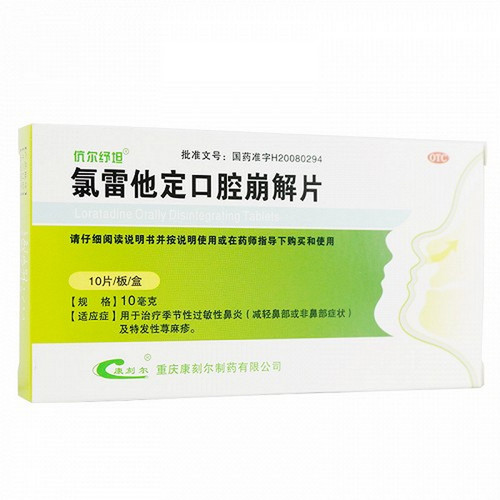
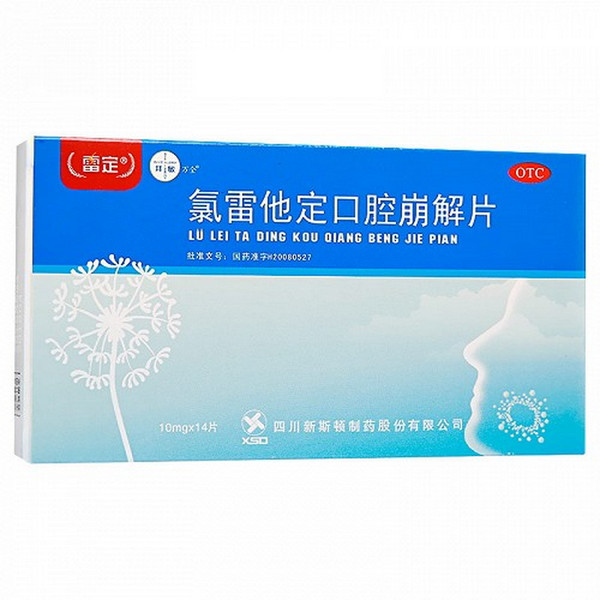
Generic Name: Loratadine Orally Disintegrating Tablets
Brand Name: Loratadine Orally Disintegrating Tablets 10mg*14 tablets
Pinyin Code: LeiDing LvLeiTaDingKouQiangBengJiePian
【Main Ingredients】
Main ingredient: Loratadine.
【Appearance】
This product is a white or off-white tablet.
【Indications/Main Functions】
Used to treat seasonal allergic rhinitis (relief of nasal or non-nasal symptoms) and idiopathic urticaria.
【Specifications】
10mg*14 tablets
【Dosage and Administration】
Tear open the foil, place the tablet on the tongue, do not use water or chew. The tablet disintegrates rapidly and can be swallowed with saliva. Adults and children over 12 years of age: 10 mg (1 tablet) once daily.
【Adverse Reactions】
At the recommended daily dose of 10 mg, this product did not show significant sedative effects. Common adverse reactions include fatigue, headache, drowsiness, dry mouth, gastrointestinal discomfort including nausea, gastritis, and rash. Rare adverse reactions include hair loss, allergic reactions, abnormal liver function, tachycardia, and palpitations.
【Contraindications】
This product is contraindicated in patients with known hypersensitivity to this product or any of its components.
【Precautions】
1. Patients with severe hepatic impairment should use this product under the guidance of a physician.
2. Use with caution in pregnant and lactating women.
3. Discontinue use of this product approximately 48 hours before a skin test, as antihistamines can prevent or reduce a positive skin test reaction.
4. This product is contraindicated in patients with known hypersensitivity to it; use with caution in patients with allergic constitutions.
5. Do not use this product if its appearance changes.
6. Keep this product out of reach of children.
7. Children must use this product under adult supervision. 8. If you are currently using other medications, please consult your doctor or pharmacist before using this product.
【Drug Interactions】
In clinical trials, 24 healthy adults were given oral loratadine concurrently with therapeutic doses of erythromycin, cimetidine, and ketoconazole. Although these drugs increased the plasma concentrations of loratadine and decarboxyethoxyloratadine, they had no significant effect on electrocardiographic indices, clinical laboratory tests, vital signs, or the incidence of side effects, and did not cause sedation or syncope. The plasma concentrations of cimetidine and ketoconazole were not affected by loratadine. Loratadine increased the plasma concentration (AuCo-24h) of erythromycin by 15%, but the clinical significance of this difference is uncertain.
【Pediatric Use】
The safety and efficacy of this product in children under 12 years of age have not yet been established.
【Use in Elderly Patients】
Because plasma concentrations in elderly patients are higher than in healthy individuals, close monitoring for adverse reactions is necessary when elderly patients use this product long-term.
【Use in Pregnant and Lactating Women】
The safety of loratadine during pregnancy has not been established. Loratadine can be excreted in breast milk, and antihistamines pose an increased risk to infants, especially newborns and premature infants. Therefore, the use of loratadine in pregnant and lactating women must be approached with extreme caution.
【Overdosage】
Overdose of this product (40-180 mg) in adults may cause drowsiness, arrhythmia, and headache. If these symptoms occur, immediate symptomatic and supportive therapy should be administered. Treatment includes inducing vomiting, followed by administration of activated charcoal to adsorb unabsorbed drug. If vomiting is unsuccessful, gastric lavage with normal saline and catharsis should be administered to dilute the drug concentration in the intestines. Hemodialysis cannot remove loratadine, and it is not yet determined whether peritoneal dialysis can remove it.
【Pharmacology and Toxicology】
Pharmacological Action: This product is a long-acting tricyclic antihistamine that relieves nasal or non-nasal symptoms of seasonal allergic rhinitis by selectively antagonizing peripheral H1 receptors. Toxicological Studies: Genotoxicity: No mutagenic effect of loratadine was observed in the Ames test, positive point mutation test, DNA damage test, and chromosomal aberration test. In the mouse lymphoma test, a positive result was observed in the inactive state, while a negative result was observed in the activated state.
【Pharmacokinetics】
This product is rapidly absorbed orally. In healthy adults, after a 10-day course of 10 mg once daily, the time to peak concentration (Tmax) of this product and its main metabolite, decarboxyethoxyloratadine, was 1.3 h and 2.5 h, respectively. With a single dose, food increased the AUC of loratadine and decarboxyethoxyloratadine by 40% and 15%, respectively, and delayed Tmax by 1 h; peak concentration was not affected by food.
【Storage】
Sealed.
【Shelf Life】
24 months
【Approval Number】
National Drug Approval Number H20080527
【Manufacturer】
Sichuan Xinston Pharmaceutical Co., Ltd.