
Product Overview
【Drug Name】
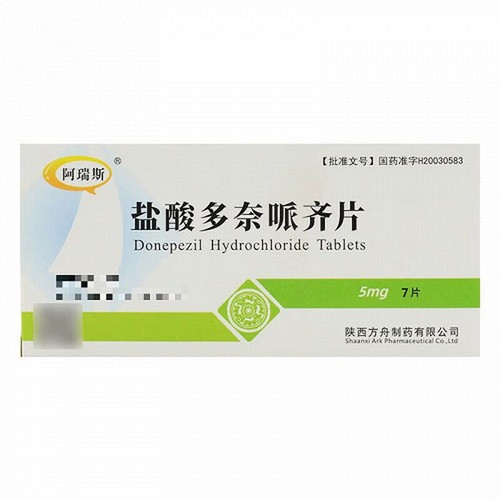
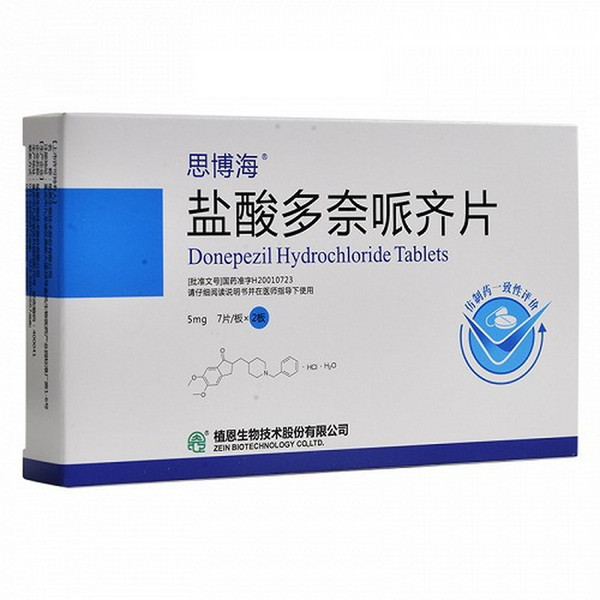
Generic Name: Donepezil Hydrochloride Tablets
Brand Name: Sibohai
English Name: Donepezil Hydrochloride Tablets
Pinyin: Yansuan Duonaipaiqi Pian
【Ingredients】
Donepezil hydrochloride. Chemical Name: ()2,3-dihydro-5,6-dimethoxy-2-{[(1-phenylmethyl)-4-piperidinyl]methyl}-1H-indene-1-one hydrochloride.
【Appearance】
This product is a pale yellow tablet.
【Indications】
Improves memory, language, and behavioral abilities. Used for the treatment of mild to moderate Alzheimer's disease symptoms.
【Dosage and Administration】
Oral administration. The initial dose is 5 mg (1 tablet) once daily at bedtime; maintain the initial dose for at least one month before increasing the dose to 10 mg (2 tablets) once daily, depending on the treatment effect. This is the maximum recommended dose.
【Adverse Reactions】
The main adverse reactions of this product are nausea, vomiting, diarrhea, dizziness, insomnia, muscle cramps, and fatigue. Most adverse reactions are transient, mild, and transient.
【Contraindications】
Donepezil hydrochloride is contraindicated in patients with a history of hypersensitivity to donepezil hydrochloride, piperidine derivatives, or excipients in the formulation.
【Precautions】
Donepezil hydrochloride treatment should be initiated and supervised by a physician experienced in the diagnosis and treatment of Alzheimer's disease. Diagnosis should be made using recognized criteria (such as DSM-IV, ICD-10). Donepezil treatment should only be initiated when the patient has a reliable caregiver who can regularly monitor the patient's medication intake. Treatment can continue as long as the benefit to the patient persists. Therefore, the clinical efficacy of donepezil should be reassessed periodically. Treatment should be discontinued when the benefit is no longer present. Each patient's response to donepezil is unpredictable. The effects of donepezil hydrochloride on patients with severe Alzheimer's dementia, other types of dementia, or other types of memory impairment (e.g., age-related cognitive decline) have not been fully observed. Anesthesia: Donepezil hydrochloride is a cholinesterase inhibitor, and may enhance the muscle relaxant effects of succinylcholine-type drugs during anesthesia. Cardiovascular system: Cholinesterase inhibitors can have a vagal effect on heart rate (e.g., bradycardia) due to their pharmacological effects; special caution is needed in patients with sick sinus syndrome or other supraventricular conduction disorders. There have been reports of syncope and seizures. Patients who may have heart block or sinus arrest should be closely monitored. Gastrointestinal system: Patients at increased risk of peptic ulcer disease, such as those with a history of peptic ulcer disease or those using nonsteroidal anti-inflammatory drugs (NSAIDs), should be monitored for symptoms. However, in clinical trials of donepezil hydrochloride, no increased incidence of peptic ulcers or gastrointestinal bleeding was observed compared to placebo. Genitourinary system: Cholinergic drugs can cause bladder obstruction, but this effect was not observed in clinical trials of donepezil hydrochloride. Nervous system: Cholinergic effects may cause grand mal seizures. However, epilepsy can also be a manifestation of Alzheimer's disease. Cholinergic drugs may worsen or induce extrapyramidal symptoms. Respiratory system: Due to its cholinergic effects, patients with a history of asthma or obstructive pulmonary disease should use it with caution. Other acetylcholinesterase inhibitors, cholinergic agonists, or antagonists should be avoided when taking donepezil hydrochloride. There are currently few reports of liver function abnormalities, including hepatitis, after taking donepezil hydrochloride, but if liver function abnormalities occur, discontinuation of the drug should be considered. If patients experience hallucinations, irritability, and aggressive behavior, the dosage should be reduced or treatment discontinued. Effects on driving and operating machinery: Alzheimer's dementia may affect the ability to drive or operate machinery. Additionally, donepezil can cause weakness, dizziness, and muscle spasms, primarily when starting the drug or increasing the dosage. The ability of Alzheimer's patients taking donepezil to continue driving or operating complex machinery should be routinely assessed by their treating physician.
【Special Populations】
Precautions for Children: Not recommended for children.
Precautions for Pregnancy and Lactation: The safety of this product in pregnant women is not well established, nor is it known whether it is excreted in breast milk. Therefore, pregnant and lactating women should use this product with caution.
Precautions for the Elderly: Use as recommended.
【Drug Interactions】
1. Inducers of CYP3A4 and CYP2D6 isoenzymes, such as phenytoin sodium, carbamazepine, dexamethasone, rifampin, and phenobarbital, can increase the clearance of this product.
2. Inhibitors of CYP3A4 and CYP2D6 isoenzymes, such as ketoconazole and quinidine, inhibit the metabolism of this product.
3. No interference with the metabolism of theophylline, cimetidine, warfarin, and digoxin has been found.
4. This product may affect drugs with anticholinergic activity.
【Pharmacological Action】
Pharmacological Action: It is currently believed that the pathogenesis of cognitive impairment in Alzheimer's disease is partly related to the decline in cholinergic neurotransmission function. Donepezil hydrochloride may exert its therapeutic effect by enhancing the function of cholinergic neurons. It reversibly inhibits the hydrolysis of acetylcholine by acetylcholinesterase, thereby increasing the concentration of acetylcholine. Based on the above mechanism of action, it is speculated that as the disease progresses, the number of functionally intact cholinergic neurons gradually decreases, and the effect of donepezil may weaken. Currently, there is no evidence that donepezil can alter the basic course of dementia. Toxicological Studies Reproductive Toxicity: In rats, administration of donepezil at 10 mg/kg/day (approximately 8 times the maximum recommended human dose based on body surface area) did not affect fertility. In pregnant rats and rabbits, administration of donepezil at 16 and 10 mg/kg/day, respectively (approximately 13 and 16 times the maximum recommended human dose based on body surface area), did not show significant teratogenic effects. In another study, rats were administered donepezil 10 mg/kg/day (approximately 8 times the maximum recommended human dose based on body surface area) from day 17 of gestation to day 20 postpartum. This resulted in a slight increase in stillbirths and a slight decrease in offspring survival rate within 4 days postpartum. Genotoxicity: Donepezil was not mutagenic in the Ames bacterial reverse mutation assay. In the Chinese hamster lung cell chromosome aberration assay, donepezil induced cleavage. Donepezil did not induce cleavage in the mouse micronucleus assay. Carcinogenicity: There is currently no data on the carcinogenicity of donepezil.
【Storage】
Store in a tightly closed container in a cool, dry place.
【Specifications】
5 mg
【Packaging】
Double aluminum packaging, 7 tablets/box
【Shelf Life】
24 months
【Approval Number】
National Drug Approval Number H20010723
【Manufacturer】
Chongqing Zhi'en Pharmaceutical Co., Ltd.