Product Overview
【Drug Name】
Generic Name: Methylcobalamin Dispersible Tablets
Brand Name: Zhuohe
English Name: Methylcobalamin Dispersible Tablets
Pinyin: Jiagu, an Pian
【Ingredients】
Methylcobalamin
【Appearance】
This product is a brown film-coated tablet; after removing the film coating, it appears light red.
【Indications】
Treatment of peripheral nerve disorders.
【Dosage and Administration】
Oral administration. Usually, adults take one tablet three times daily. The dosage may be adjusted according to age and symptoms.
【Adverse Reactions】
1. Allergic reaction: Occasionally, a rash may occur (incidence <0.1%). Discontinue use if this occurs.
2. Other: Occasionally (incidence 5%–0.1%), loss of appetite, nausea, vomiting, diarrhea.
【Contraindications】
Contraindicated in patients with a history of allergy to methylcobalamin or any of the excipients in the prescription.
【Precautions】
1. If ineffective after one month of use, discontinue use.
2. Workers exposed to mercury and its compounds should not take this product in large quantities or for extended periods.
3. After opening, this product should be stored away from light and moisture.
【Special Populations】
Precautions for Children: Follow your doctor's instructions.
Precautions for Pregnancy and Lactation: Although mecobalamin has not shown teratogenic effects in animal studies, its safety in pregnant women is unclear. It is unclear whether mecobalamin is excreted in breast milk, but animal studies have reported its excretion in breast milk. The safety of this product in lactating women is unclear.
Precautions for the Elderly: Due to decreased function in the elderly, it is recommended to take appropriate measures and reduce the dosage under the guidance of a doctor.
【Drug Interactions】
Not yet clear.
【Pharmacological Action】
1. Mecobalamin readily translocates to organelles in nerve cells, thereby promoting the synthesis of nucleic acids and proteins. Compared to cyanocobalamin (CN-B12), methylcobalamin exhibits better organelle transfer into nerve cells (rat). It acts as a coenzyme in the conversion of homocysteine to methionine. In experiments with brain and spinal cord nerve cells, it particularly participates in the conversion of deoxyuridine to thymidine, promoting nucleic acid and protein synthesis (mouse). 2. Promotes intra-axonal axial flow and axonal regeneration. In streptozotocin-induced diabetic rat sciatic nerve cell experiments, it normalizes axonal skeletal protein transport. It also inhibits the appearance of neuropathological and electrophysiological degeneration in drug-induced neurological disorders (rat, rabbit) induced by doxorubicin, acrylamide, and vincristine, as well as in mouse models of axonal degeneration and naturally occurring diabetic rats. 3. Promotes myelin formation (phospholipid synthesis). By increasing the activity of methionine synthase, it promotes the synthesis of lecithin, the main lipid constituting myelin, leading to myelin formation (rat). 4. Recovery of Delayed Axonal Transmission and Reduced Neurotransmitter Levels: In the sciatic nerve compression experiment, increased nerve fiber excitability led to early recovery of the induced endplate potential (rat). Furthermore, experiments on rats fed a choline-deficient diet demonstrated the normalization of low intracranial acetylcholine levels.
【Storage】
This product should be stored away from light and moisture after opening.
【Specification】
0.5mg
【Packaging Specification】
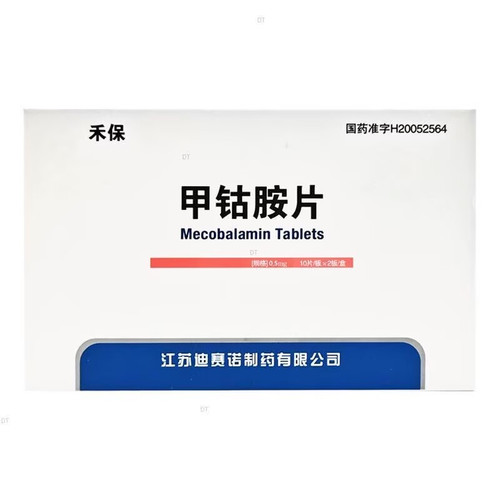
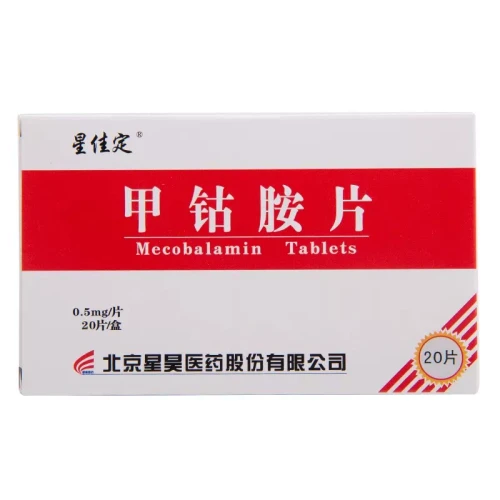
20 tablets/box
【Shelf Life】
30 months
【Approval Number】
National Drug Approval Number H20080290
【Manufacturer】
Company Name: Jiangsu Sihuan Biopharmaceutical Co., Ltd.